Through a God-directed series of events, World Medical Mission doctors partnered with Tenwek Mission Hospital staff to save the life of a newborn in need of heart surgery.
Baby Jay needed a miracle. And soon.
Like any first-time parents, Elijah and Hannah Mwaura were overjoyed when they welcomed their son into the world March 30. But when Hannah cradled him in her arms, she noticed that something was wrong. Although he seemed to be breathing without any difficulty, the newborn’s lips, fingernails, and toenails were purplish-blue instead of the healthy pink that she expected.
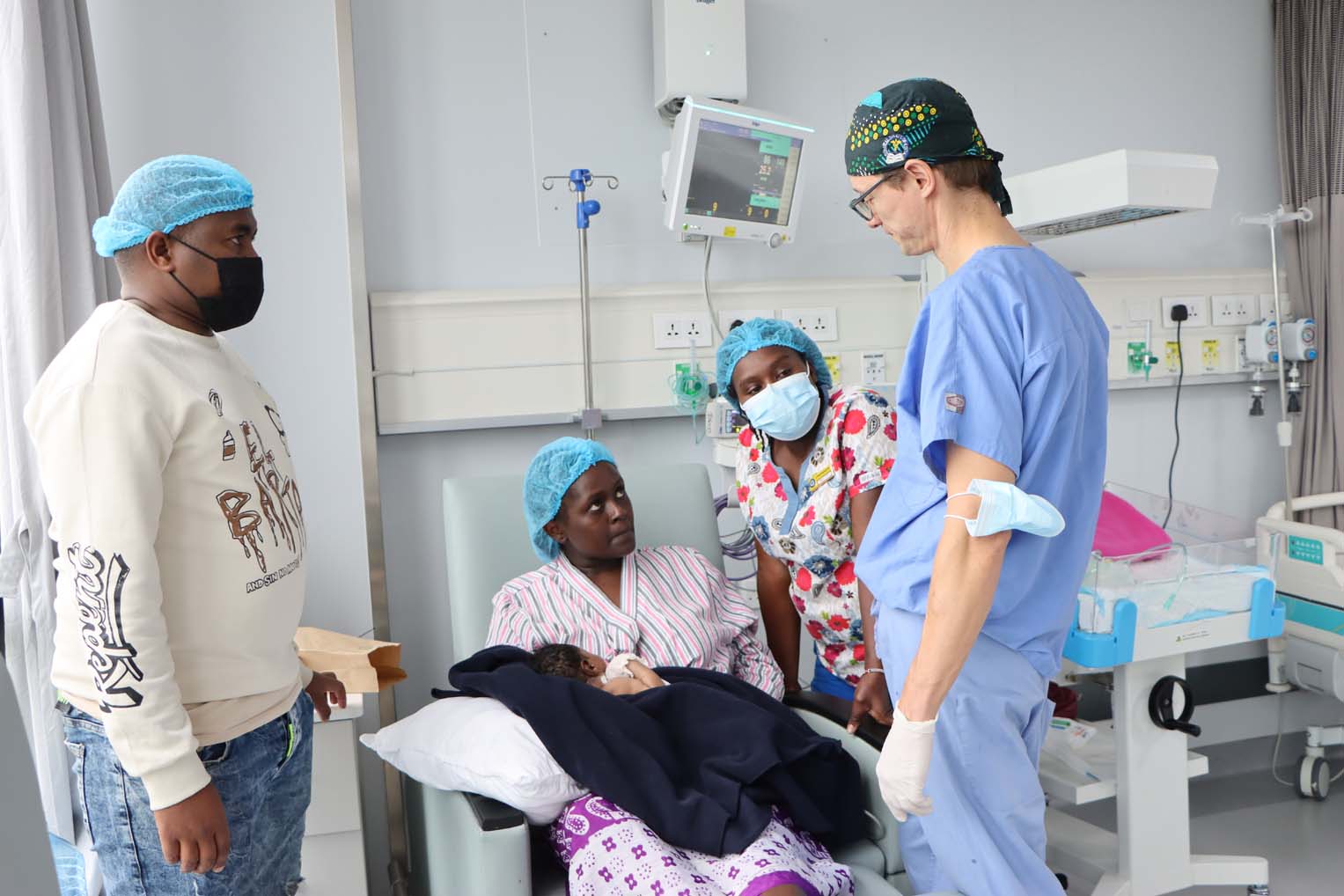
Dr. Elijah Bolin with Baby Jay’s parents Elijah and Hannah Mwaura.
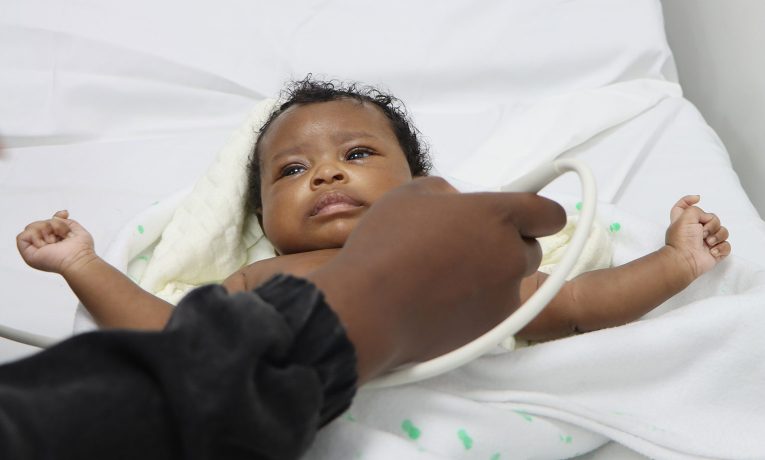
The staff at Kijabe Mission Hospital in Kenya did an echocardiogram and diagnosed the infant with a rare heart defect known as transposition of the great arteries, or TGA. For babies with this condition, the aorta and the pulmonary artery are reversed from their normal positions. The result is dangerously low blood oxygen levels.
If not repaired surgically—usually within the first few weeks of life—the condition is ultimately fatal.
God’s Perfect Timing
Three hours away at Tenwek Mission Hospital, Dr. Elijah Bolin, a pediatric cardiologist, received an urgent phone call from Kijabe. They wanted to transfer their little patient to Tenwek’s cardiothoracic center, a new and advanced surgical facility equipped to handle specialized heart cases like Jay’s.
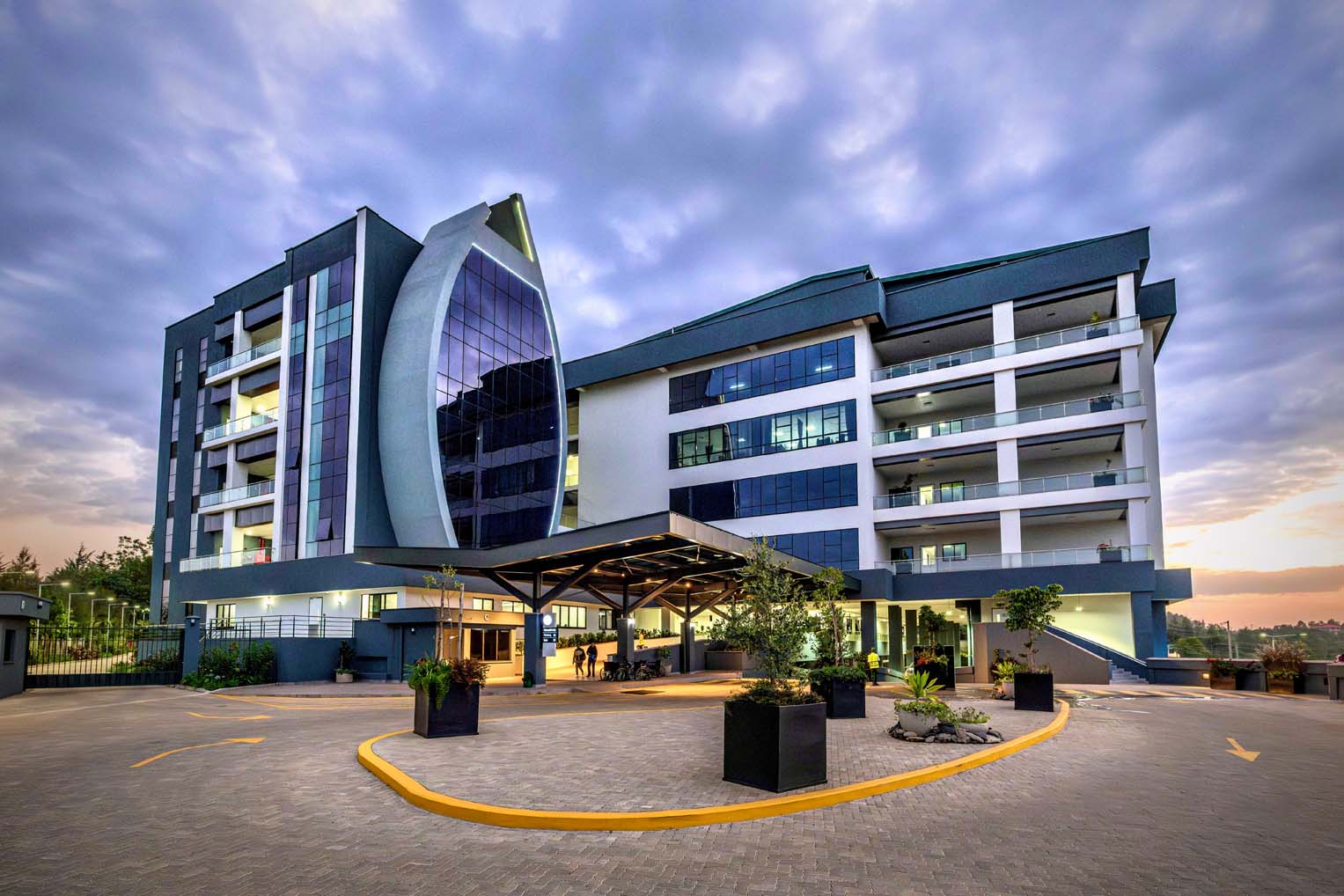
The new cardiothoracic center at Tenwek has the capacity to care for 2,000 heart patients per year.
“Jay was two days old when I got the call about him,” said Bolin, who serves at Tenwek through our World Medical Mission Post-Residency Program. “We knew it would be a series of high-risk procedures he would need, but, without anything, Jay would likely die in several days. The window for intervention was quickly closing.”
“All of the timing clearly was just God’s hand upon this baby.”
On the same day that Jay was admitted to the hospital, a volunteer team of heart doctors from World Medical Mission was scheduled to arrive. The center had opened a new catheterization lab in January, and the team had come to assist staff and conduct training in catheterization procedures.
The team included pediatric cardiologists, Dr. Allison Cabalka and Dr. Carrie Herbert, and an anesthesiologist specializing in pediatric cardiology, Dr. Paul Stensrud. When they were made aware of the new born infant’s situation, they determined the child needed immediate intervention.
The best course of action was to do a balloon atrial septostomy. The catheterization would basically stabilize Jay and improve his oxygen levels until the arrival the following week of a doctor specializing in a long-term solution.
By God’s providence, World Medical Mission pediatric heart specialist, Dr. David Lehenbauer had already made arrangements to serve at Tenwek the following week. He was the exact type of specialist Baby Jay needed, one with experience in performing arterial switch surgeries.
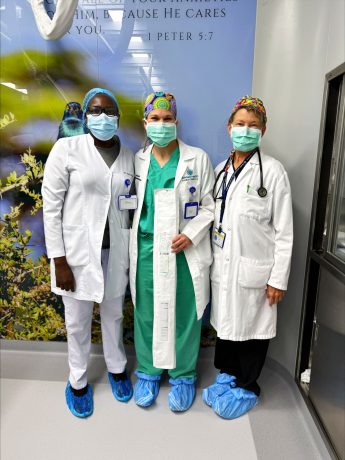
Dr. Emily Chesire (left) arranged for delivery of the medical instruments for Dr. Carrie Herbert and Dr. Allison Cabalka to perform the catheterization, known as a balloon atrial septostomy, for Baby Jay.
There was just one problem.
“A very specific catheter was designed to perform that procedure, which was not on the shelf at Tenwek,” said Cabalka. “The cardiothoracic center wouldn’t have a reason to stock that type of catheter tube because they don’t have a full-time neonatal surgeon, and it wouldn’t be a procedure they would anticipate commonly doing.”
But God provided the exact equipment for the particular procedure needed to save the child’s life.
Cabalka and the team contemplated using the existing equipment, but they considered another possibility. At Bolin’s invitation, pediatric cardiologist Dr. Emily Chesire, from Moi Teaching Hospital in El Doret, Kenya, had come to observe the United States team’s work in the cardiac catheterization lab.
As they discussed the baby’s case with the visiting doctor, Cabalka said they asked the woman if she “by chance” had access to a balloon septostomy catheter.
To everyone’s amazement, the physician replied, “Yes, I do. As a matter of fact, I received one just a month ago and I remarked to myself, ‘What am I going to do with this catheter?’”
El Doret is a four-hour journey away from Tenwek by car. That evening a cardiac intensivist was planning to come to Tenwek to assist staff with postoperative care for heart patients having surgery that week. He was contacted and hand-delivered the catheter to Cabalka.
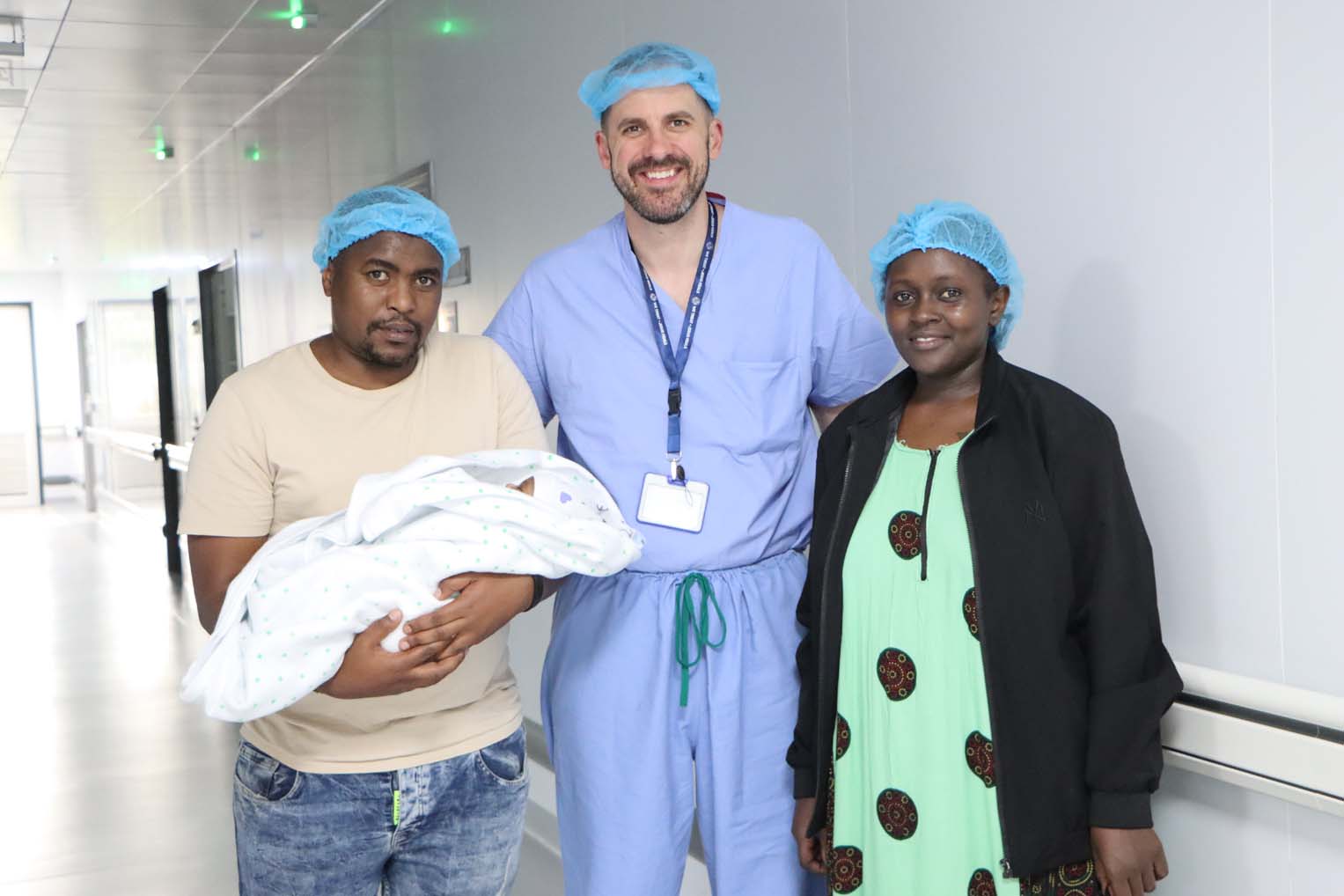
Dr. David Lehenbauer rejoices with the Mwauras about their son’s restored health.
“All of the timing clearly was just God’s hand upon this baby,” Cabalka said.
After the catheterization, Jay was able to breathe on his own and was able to breastfeed while awaiting the permanent repair surgery.
Changing One Life and History
Dr. David Lehenbauer was acquainted with the arterial switch procedure through his work at the Cincinnati Children’s Hospital Medical Center, but the operation had never been attempted at the Tenwek cardiothoracic center.
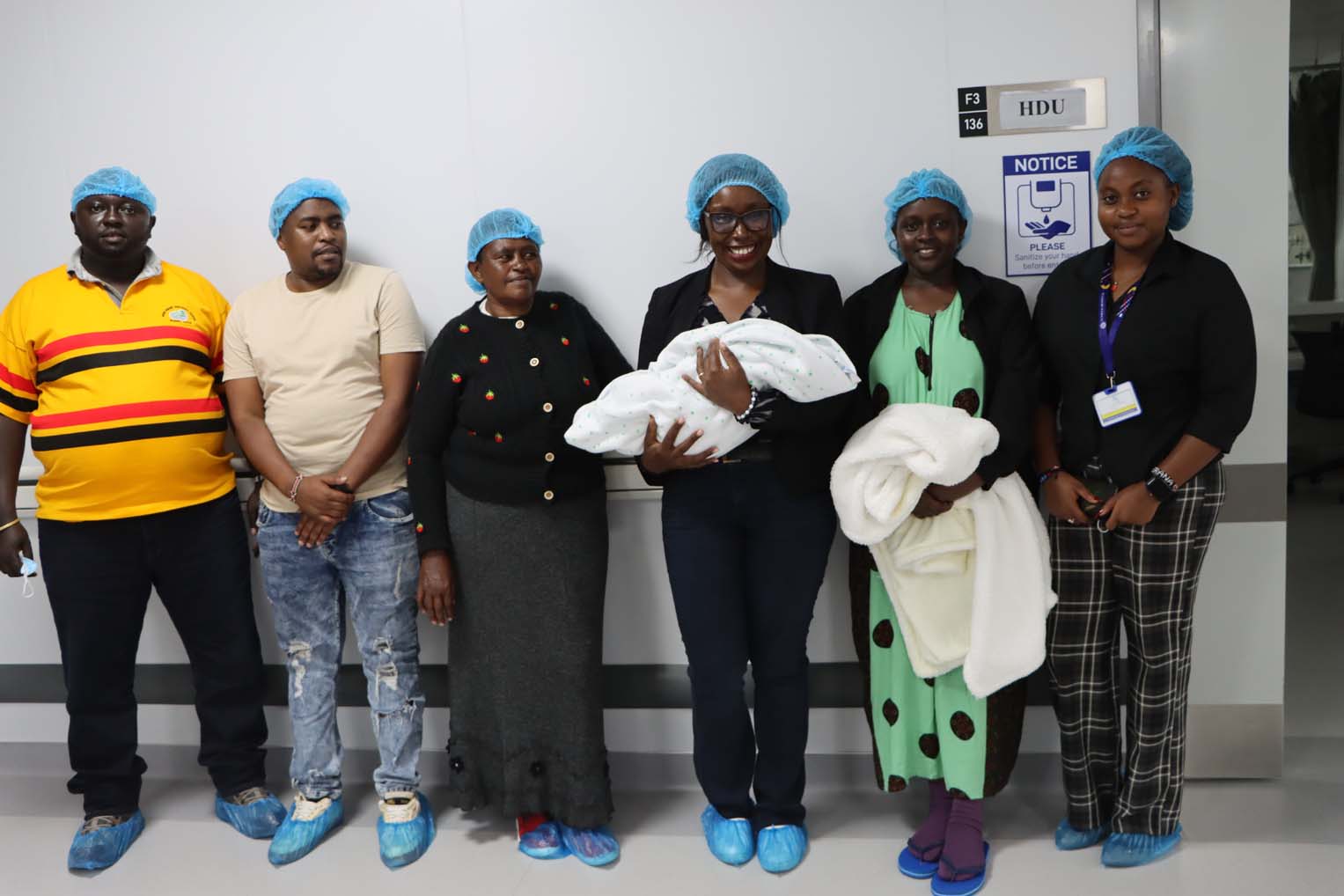
The Mwauras’ extended family joined them at the hospital.
“Newborn heart surgery is not the same as older kid and adult surgery. It’s much more challenging. They are more susceptible to complications,” said Lehenbauer. “I was concerned that it was going to be a struggle. Doing the operation is one thing, but then managing a newborn baby after the operation is another.”
A week later, at 17 days old, Jay was released to go home.
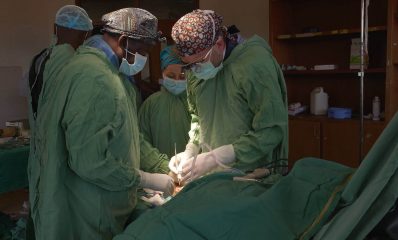
During the delicate and complex five-hour procedure, Tenwek staff surgeon Dr. Yonas Teferi and Lehenbauer disconnected the major blood vessels and reattached them to the correct heart chambers.
All went well, and postoperative care was provided by the entire Tenwek cardiothoracic center team and the visiting intensivist from El Doret. Baby Jay will probably need no additional surgeries and can enjoy a normal, active life.
A week later, at 17 days old, Jay was released to go home. More than a dozen Tenwek staff gathered to congratulate the Mwauras, taking turns holding their beautiful child, capturing keepsake photos, and giving praise to God.
Dr. Cabalka missed the celebration, as she had already returned to Minnesota, but she kept in touch with Tenwek staff to follow the progress of her new favorite little patient.
“There is no other explanation for how things came together. A historical event for Tenwek and a life changing event for this precious baby!”
“I think on every mission trip, there’s always a child that makes the whole trip worth it. Ultimately, each person that you treat is worth the trip,” she said. “I hope Jay’s parents will glorify the Lord and testify of all the events that God brought about to save his life. There is no other explanation for how things came together. A historical event for Tenwek and a life changing event for this precious baby!”
Billed as a world-class facility, the seven-story cardiothoracic center houses several operating rooms, patient wards, a catheterization lab, endoscopy procedure rooms, exam rooms, a large education wing, and a chapel.
Samaritan’s Purse is a long-time partner of Tenwek, located in Bomet, Kenya, and was among the major ministry partners who helped to fund construction of the cardiothoracic center.
Edward Graham and other representatives of Samaritan’s Purse attended the dedication ceremony in October 2024. Our World Medical Mission program continues to support Tenwek’s work by sending more than 200 volunteer healthcare professionals on short-term assignments each year.
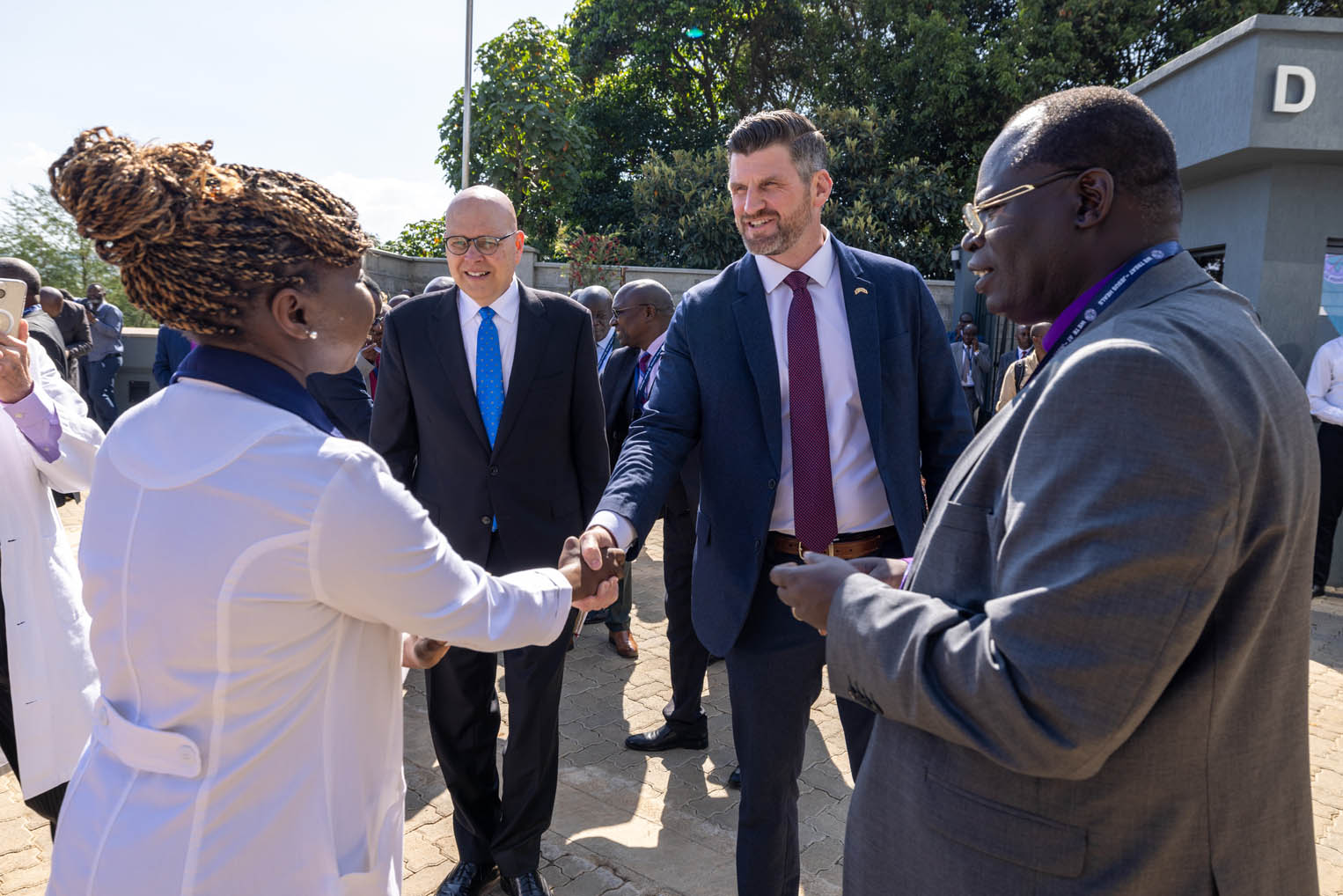
Edward Graham with Scott Hughett (at left), World Medical Mission director, attended the dedication ceremony at Tenwek in October 2024.